I'm an Aussie Blogger
Showing posts with label women. Show all posts

Friday, March 7, 2008

Our family's intergenerational celebration of International Women's Day in Cairns.

Today is International Women's Day. I am celebrating with other women including my daughter Megan at a relaxed afternoon tea hostessed by the talk doctors of Imaginif.


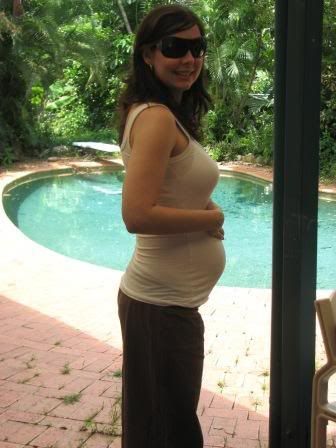
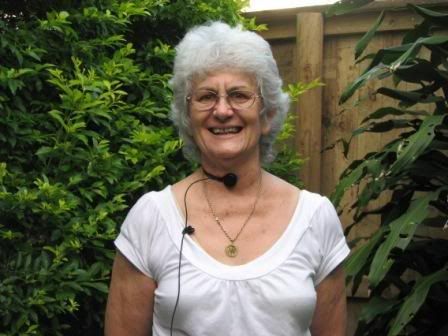
Unfortunately for us, my grand daughter Jade (with my first great-grandchild well on the way) is unable to celebrate with us in person today. Jade left with her husband for a holiday in Thailand yesterday. However, before Jade left, Megan managed to get three separate photos so we could showcase three generations of women who believe strongly in the rights, stories and experiences of women:

My grand daughter Jade looking very proud about our special baby bump. Jade is 25 - I think.


My daughter Megan (from Imaginif) is around about 44 or maybe 45 this year. Megan is our beautiful Jade's wonderful mother

Myself in our lush, tropical garden - it is all the rain making it so green, not my tender loving care! I am around 60 + something.

Pop over to Megan's post about how we celebrated International Women's Day here in Cairns, Australia.

Australia Gift Shop

Friday, March 16, 2007

Top of the morning to you all on St Patrick’s Day, 2007.

As we approach mid-night on the eve of St Patrick’s Day, my son and I sit here with two precious friends who have recently emigrated from the UK to Australia. We remember the Irish Orphan Girls who so bravely came to our shores as involuntary emigrants from Ireland and England all those years ago. Australia can be a harsh land even at this time in history. These young girls must have endured much suffering during their experiences of dislocation and resettlement. Those voyages to Australia would have been long and uncomfortable. The experiences of our Irish Orphan Girls are woven into the fabric of our Nation.

You can read a little about experiences of the Irish Orphan Girls and how difficult their life must have been in a Report by The Children’s Apprenticeship Board at Adelaide to the Poor Law Commission Office Dublin dated 27th November 1850. Between 1848 and 1849, twenty ships brought a total of 4,114 Irish girls from the Irish Workhouses to Australia. Eleven ships to Sydney with 2,253 girls, six ships to Pt Philip with 1,255 girls and three ships to Adelaide with 606 girls. In 1849 when the effects of the Irish potato famine of 1846 – 1847 were still being felt, a ship load of orphan Irish children departed Liverpool via Plymouth for Australia. You can read the story about The Pemberton Orphan Ship in the Times: Immigration – Plymouth, January 22 (1850).

So many people from many lands were dislocated and resettled in Australia. The result of those times when there was so much hardship and despair is the wonderful country we enjoy today. Rather than mourn the dreads of the past, let us embrace the result of those years and strive to unite on this day of Celebration, St Patrick’s Day, March 17th, 2007.

To leave you on a happy note, you can explore some of the Irish heritage of Australia in this ancestral tribute by descendants of Irish families who came to Australia to escape the devastation of the An Garta Mor – The Great Starvation better known as, the potato famine.

Although I have written about the Irish Orphan Girls before, St Patrick's Day is such an appropriate time to celebrate the memory of these brave girls and the enormous contribution they made to Australian society then and also as we know it today. I hope the story about these girls has touched your heart, wherever you may be.

Sue Bayliss. Cairns, Australia.

Saturday, February 3, 2007

READ ALL 'BOUT IT. PAPER. READ ALL 'BOUT IT. GET YOUR PAPER 'ERE

Alright! Alright! So what's all the din about Mate?

Why! Didn’t ya hear me cobber?

Human Papilloma Virus (HPV) vaccines. That’s what! Big news, Mate. Got it ‘ere in Oz first ya know. Stone the crows. Don’t yous know nothin, Mate?

This vaccine has the potential to save many lives from the ravages of cervical cancer. Controversial? It may be. This topic is well publicized by the media.

Media reports reflect concerns stated by some parents in the USA that allowing such a vaccine to be given to girls as young as 12 and 13 years of age may encourage promiscuity. At present time, there is no evidence to base these concerns upon.

In Australia, there is a strategic plan to vaccinate young women by targeting three groups. Firstly, an ongoing target group of 12 and 13 year old girls through a school-based program (this has already commenced). Secondly, a catch-up group of 13 to 18 year old girls predominately in a school-based program and thirdly, a further catch-up group of young women up to and including 26 years of age in a community based program.

Read for yourself, allowing you to make an informed opinion on this topic. This first link includes links to other articles, including this second link. The information in these links refers to Australia. However, wherever you live, be informed then consider your choices in consultation with the young women in your family and also in relation to the legal status of this vaccine in your country.

If you would like to leave a comment, please do. I will be away from Sunday morning 4th February to Tuesday morning 6th February, inclusive. However, following my return, I am happy to answer your comments. If you prefer to contact me confidentially, my email address is s.j.bayliss@bigpond.com.au – my sister and I are survivors of cancer. Our two brothers died from cancer. As siblings, two were diagnosed with identical cancer and two of us each had different kinds of cancer.

Sue Bayliss. Cairns, Australia.

Sunday, January 21, 2007

Kookaburra. Oh, how proud I am of you.

Following on from my previous two articles,“Listen well, my friend. Collectively, we are a voice to be heard.” and “The story of a great Australian woman.”, I would like to share with you a lovely story symbolizing the individual strength and also the collective strength of a minority group of remarkable Australian women. Our Australian war widows. This charming story is especially significant as we approach our National Day of Celebration, Australia Day - 26th January 2007.

WAR WIDOWS GUILD OF AUSTRALIA

GUILD BADGE

The Badge was chosen by our first National President and founder of the Guild, Mrs Jessie Vasey, OBE, CBE.

The badge issued by the Government to widows during or just after the war was so depressing, as it had a little old bent over woman bedecked in widows’ weeds and looking so sad.

Mrs Vasey said we must have a badge typically and completely Australian. It must have no element of self-pity or sloppy sentiment and it should be one that could be worn proudly by every widow whatever her creed or ideals.

After numerous suggestions for a design from all over Australia, it was finally decided that the badge would feature the Kookaburra, an industrious and cheerful bird who mated for life, was fearless and aggressive in the defence of its young and the area of territory it regarded as its own. “He goes out after what he wants – fights for his family. Isn’t that what we’re doing?” Mrs Vasey asked her girls.

Mrs Vasey approached Mr Andor Meszaros, a distinguished Hungarian sculptor who was born in Budapest in 1900 and educated in Budapest and Vienna and was at that time living in Melbourne.

She asked him to design a badge featuring a Kookaburra and he suggested the present one, which was accepted by all the States. It depicts a Kookaburra alighting in flight onto a branch of gum leaves. It is a brave bird and will tackle anything as young widows had to do. The bird also had a unique call, not a song but a laugh; a chortle of rollicking mirth. It was a call to win the widow back to laughter.

(An extact from an information folder given to members of the Australian War Widows’ Guild when joining.)

This brings to a close my blogs about Australian war widows. Personally, I am strengthened and encouraged by the companionship and feelings of solidarity with my fellow members of the War Widows’ Guild of Australia and the example of those who have gone before us. As a person living with spasmodic dysphonia and cervical dystonia, I feel greatly encouraged by the examples set by war widows. They have taken their incredible loss and turned it into a strength reflecting great determination, worth and courage.

Like war widows - we need not be hampered by our experiences, living with dystonia in all its forms, but can be transformed into holistic beings reflecting great values of spirit and strength.

Sue Bayliss. Cairns, Far North Queensland, Australia.

Saturday, January 20, 2007

The story of a great Australian woman.

This article follows my previous article, “Listen well, my friend. Collectively, we are a voice to be heard.” The following story is an extract from an information folder given to members of the Australian War Widows’ Guild when joining.

JESSIE MARY VASEY, OBE, CBE – 1897-1966.

“Yet it is no mean destiny to be called upon to go on for a man who laid down his life, as Christ did, to save mankind from the power of the Beast”.

These are the words spoken by the founder of the War Widows’ Guild of Australia, Jessie Mary Vasey, after the death of her husband Major General George Vasey in early 1945. With her natural ability as a leader, her charm and intellect, she gathered around her a group of talented, able and determined women to start a craft guild which taught weaving and other handicrafts to members so that they could augment their pitifully inadequate pensions. So was the beginning of a powerful lobby group which is consulted by Governments on all matters concerning war widows today.

War Widows of World War 1 and World War 2 needed not only financial help, their pensions were meager, but they were in many ways a forgotten group. Everyone wanted to forget the war. The Guild provided companionship, counseling, child-minding and above all an environment of mutual support where members could relax and feel secure.

As Guilds were established in all States the organization became more powerful and men in Government and Welfare reluctantly recognized its political importance. Mrs Vasey worried about accommodation available to members, especially the older women, and by 1954 the Guild was in a position to take advantage of the Aged Persons Home Act and go on to control an empire of property. Each State made its own arrangements to cater for members’ needs, reacting in different ways but making housing their priority.

Today there are over 120,000 war widows. It is Jessie Mary Vasey, and the women she inspired to work with her, whom they must thank for the security they now enjoy.


I hope you have enjoyed this inspiring story about an Australian woman whose strong spirit of determination, followed by her actions led to assistance, companionship and security, for thousands of Australian women whose husbands paid the ultimate price for the good of their country. You will find lots of information about Australia on www.australiaday.gov.au as we approach our National Day of Celebration, Australia Day on 26th January, 2007.

To be eligible for membership of the War Widows’ Guild of Australia, a widow must be designated “War Widow” by the Department of Veterans’ Affairs, (which means that her husband’s death has been accepted as due to war causes), re-married War Widows or a Defence Service Widow in receipt of a compensation from the Department of Veterans’ Affairs.